
It’s an old story , but I thought it was worth writing after a long 10 year gap. This came to mind after we got into some fun discussions regarding what we have done for our curriculum project.The idea kicks in while wandering on some topic to do that heavy lift curriculum project.After long sets of sorting and filtering we four decided to have a try on the Prototype of Droyo.
| Sensor Dashboard | Raw Un Covered :) |
|---|---|
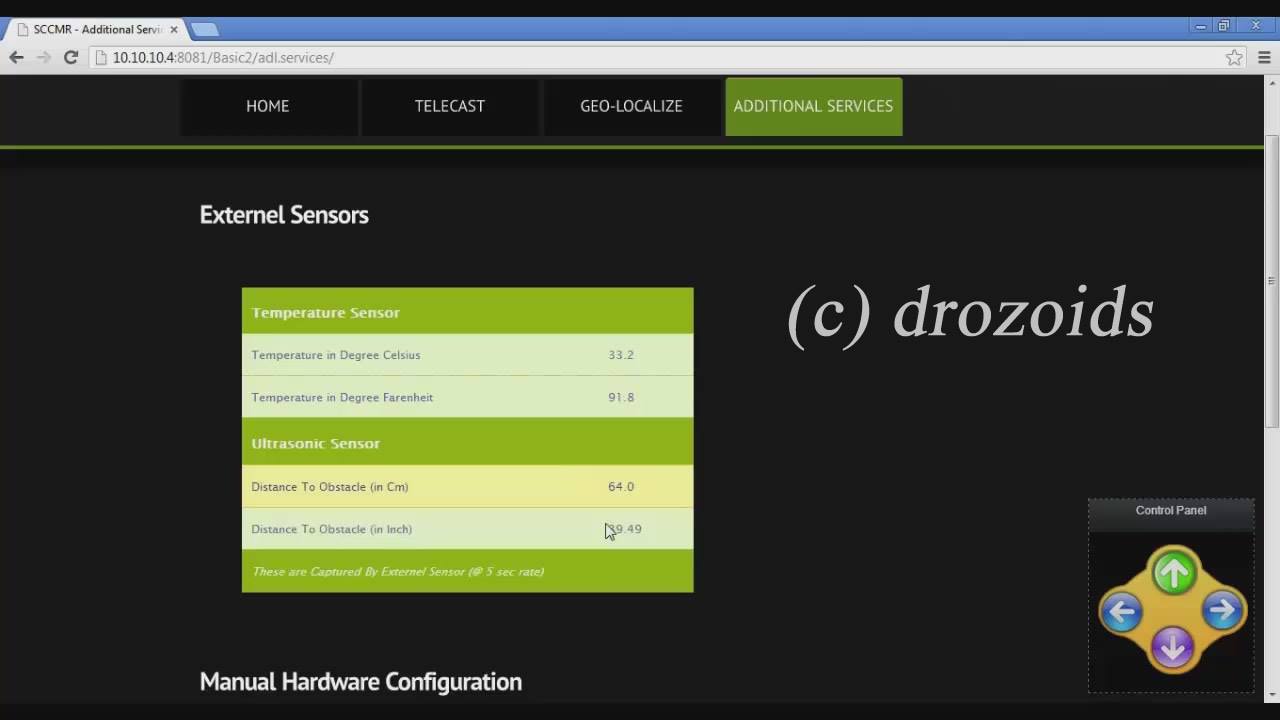 |
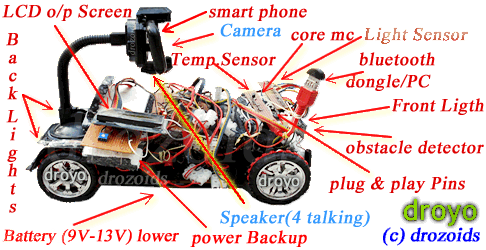 |
Introduction
In the ever-evolving world of technology, the convergence of smartphones, cloud computing, and miniature robotics has given rise to groundbreaking innovations. One such innovation is DROYO, a cutting-edge robotic system that brings together the power of smartphones and the vast capabilities of cloud computing. Inspired by the Internet of Things (IoT) concept, DROYO represents a significant leap forward in autonomous robotics for defence and research purposes. Let’s dive deeper into the features, scope, importance , and core concepts of this remarkable creation.
Core Concepts and Importance
DROYO was conceptualised and developed in the year 2012 when the Internet of Things (IoT) was gaining prominence. The IoT revolution paved the way for interconnected devices and the exchange of data, enabling innovative applications in various fields. DROYO took inspiration from the IoT concept and aimed to integrate smartphones, cloud computing, and robotics to create a revolutionary autonomous vehicle model.
The Core Concept of DROYO lies in its ability to distribute computational tasks between the robot and the cloud. Low-level computations are executed within the robot itself, while intensive computations, such as analysing path graphs, are delegated to cloud. This distributed computation approach optimises the robot’s performance and enables it to handle complex tasks efficiently. Additionally, the concept of plug and play integration allows users to easily connect additional devices and sensors to expand DROYO’s capabilities, making it a part of the IoT network.
Features
DROYO encompasses a wide range of impressive features that set it apart in the realm of autonomous robotics:
Smartphone Control: DROYO is controlled through a smartphone, providing users with remote access from anywhere in the world. Its smartphone-controlled interface ensures seamless interaction and control over the robot’s movements and functionalities.
Cloud-Enabled Head: DROYO’s “head in the cloud” concept leverages the power of cloud computing. By offloading compute-intensive tasks to the cloud, such as image processing and voice recognition, DROYO can access vast amounts of processing power and data, enhancing its capabilities and enabling on-demand services.
Customizability: DROYO offers a high degree of customizability. Users can easily connect additional sensors and devices to the robot, expanding its functionalities based on specific needs. This plug-and-play approach simplifies the integration process, making it user-friendly and adaptable to various applications.
Multi-Utility Robot: DROYO is designed to be a versatile multi-utility robot. It can be transformed into an indoor robot by switching from 3G/2G to Wi-Fi connectivity. This adaptability allows DROYO to navigate and operate effectively in different environments, making it suitable for a wide range of applications.
Impressive Features
DROYO’s capabilities are nothing short of impressive. Firstly, it offers omnidirectional movement, enabling it to navigate in all four directions: left, right, forward, and backward. This manoeuvrability ensures efficient exploration and traversal of various terrains. DROYO also incorporates a light sensor that interacts with cloud servers, automatically turning its headlights on or off depending on the ambient light conditions. Users can also take control of the headlights when desired.
In terms of obstacle detection and navigation, DROYO employs an obstacle sensor that detects obstructions in its path. When an obstacle is detected, DROYO cleverly manoeuvres itself by moving backward, akin to the graceful movements of a cat. This feature ensures the robot’s safety and enables it to navigate complex environments.
One of the most notable features of DROYO is its multilingual communication ability. The robot can “TALK!” in multiple languages, providing a truly interactive and engaging experience for kids & elders alike . Furthermore, DROYO boasts a Live Eye feature, allowing users to witness its perspective in real-time through a high-definition streaming feed on their remote device. This feature adds a sense of immersion and excitement, akin to playing a thrilling game of “Seeing Ops and Riding!”
DROYO’s integration with smartphone sensors is another remarkable aspect. It utilises various sensors found in smartphones, including the gyroscope, magnetic field sensor, and accelerometer. Users can also upgrade these sensors by using a newer, high-end smartphone, enabling DROYO to keep up with the latest technological advancements.
Scope
Scope for DROYO was promising, as advancements in cloud computing, smartphone technology, and robotics continue to progress. With the growing popularity of 5G networks now , DROYO can benefit from increased bandwidth and reduced latency, further enhancing its remote control capabilities and real-time data processing. Additionally, as cloud infrastructure and edge computing capabilities expand, DROYO can leverage these advancements to perform more complex computations locally while maintaining seamless integration with the cloud.Not limited to home sweeping machines , farmland devices and lots to add up
The year 2012 holds significance in the development of DROYO as it marks the emergence of the Internet of Things (IoT) concept. The IoT revolution opened up new possibilities for interconnected devices and data exchange. DROYO embraced this concept and utilized it to create a groundbreaking robotic system that leverages smartphones and cloud computing. The advancements in virtual machine implementation and container orchestration around that time provided a foundation for DROYO’s distributed computational capabilities. Therefore, the developments and ideas prevalent in 2012 played a crucial role in shaping DROYO into the innovative autonomous vehicle model it is today.
Conclusion
DROYO exemplifies the remarkable potential that arises from the integration of smartphones, cloud computing, and robotics. Its distributed computation approach, smartphone control, customizability, and multi-utility features make it a game-changer in the field of autonomous robotics. With promising future scope and its foundation built upon the core concepts of the IoT era, DROYO stands at the forefront of technological innovation, paving the way for more advanced and intelligent miniature robotic systems.